


Magnesium Glycinate Supplements
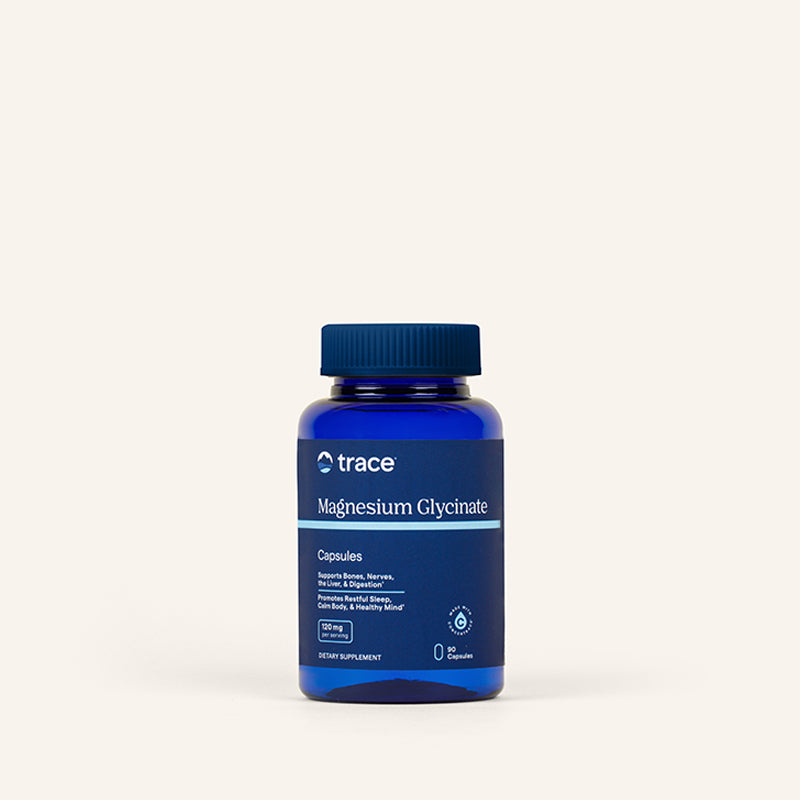
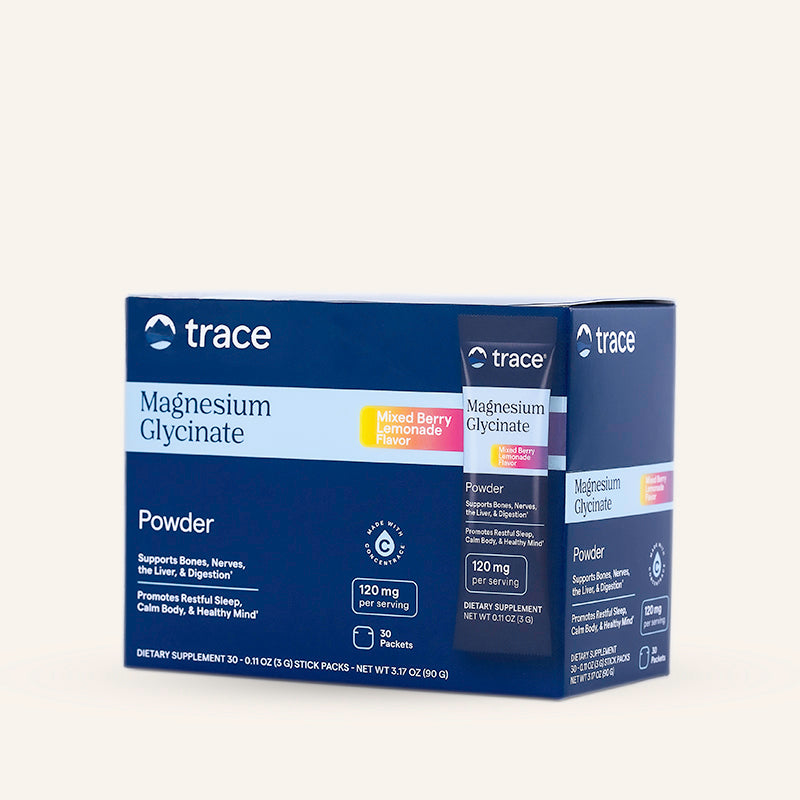
Among the many forms of magnesium, magnesium glycinate supplements stand out for their calm, steady impact on the body. This form binds magnesium to glycine, an amino acid that promotes relaxation and supports restful sleep. It’s highly bioavailable, gentle on digestion, and effective for maintaining daily magnesium balance.
Filters
Filters


Key Roles Magnesium Plays In Daily Wellness
Magnesium is deeply involved in nearly every aspect of daily wellness.
1. Muscle And Nerve Function
Magnesium helps support muscle contraction and relaxation while promoting balanced nerve signaling for proper coordination and reaction time. It also supports cardiovascular health.
2. Energy Metabolism
As a cofactor in hundreds of enzymatic reactions, magnesium supports ATP production—the body’s primary energy source, helping convert carbohydrates, fats, and proteins into usable fuel for sustained daily vitality and performance.
3. Sleep Quality
Magnesium supports sleep quality by working with neurotransmitters to promote rest. It also helps maintain a consistent sleep-wake rhythm, supporting relaxation and nighttime recovery.
4. Cognitive Function
This essential mineral supports synaptic plasticity and neural communication, aiding focus and learning. Magnesium helps promote mental clarity and cognitive performance.
5. Immune Support
Magnesium contributes to the formation and function of immune cells and supports the body’s natural inflammatory responses. Reinforcing cellular defenses helps maintain immune readiness, particularly during periods of seasonal change.
6. Women’s Health Considerations
For women, magnesium supports comfort during the menstrual cycle, helps maintain bone density, and promotes relaxation and well-being.
7. Athletic Performance And Recovery
Magnesium supports efficient muscle performance and oxygen use. It also aids electrolyte replenishment during training, contributing to endurance, hydration, and efficient muscle recovery.
8. Heart Wellness
Magnesium plays a key role in supporting a steady cardiac rhythm and optimal cardiovascular output.
Support calm focus and steady wellness with Trace magnesium glycinate supplements. Designed for gentle absorption and daily balance, they help promote relaxation, muscle recovery, and restorative sleep. Trust Trace to provide clean, ionic minerals sourced with precision and tested for purity, crafted to help your body maintain balance and perform at its best naturally.

What Sets Magnesium Glycinate Apart
Magnesium glycinate stands out for its unique balance of effectiveness and tolerability. It combines magnesium with the amino acid glycine, allowing for smooth absorption and gentle digestion.
- Highly Bioavailable: Magnesium bound to glycine is well-absorbed and generally gentle on digestion, which may help those who struggle with other forms.
- Calming Companion Amino Acid: Glycine is an inhibitory amino acid. Paired with magnesium, it may support relaxation, stress resilience, and sleep quality. Stomach-friendly Profile: Compared to forms like magnesium oxide or citrate, glycinate tends to cause fewer GI disruptions for many users.
- Consistent Daily Use: Its tolerability makes it a practical option for long-term routines focused on steady mineral intake.
- Broad Systems Support: Magnesium plays roles in muscle function, nerve signaling, energy metabolism, and cardiovascular health; the glycinate form makes everyday support more accessible.
- Evening-friendly Timing: Many prefer taking magnesium glycinate later in the day to align with wind-down routines and recovery.
- Stackable With Other Nutrients: Depending on individual needs, it is often combined with electrolytes or trace minerals to round out daily intake.
How It Compares To Other Forms
- Magnesium Citrate: Often used for digestive support; may be more likely to cause loose stools.
- Magnesium Oxide: High elemental magnesium but lower absorption; can be tough on sensitive stomachs.
- Magnesium Malate: Common in morning routines to support energy-related pathways; different use case than glycinate’s calm-centric profile.
- Magnesium Threonate: Researched for neurological uptake; typically pricier and used with a narrower focus.
Recommended Intakes And Safe Upper Limits
Understanding how much magnesium your body needs—and how much is too much—is key to safe and effective supplementation. Recommended intakes vary by age, sex, and lifestyle, while upper limits help prevent excessive supplement intake.
Daily Recommended Dietary Allowance (RDA)
- Adults 19–30 years:
- Women: ~310 mg/day
- Men: ~400 mg/day
- Adults 31+ years:
- Women: ~320 mg/day
- Men: ~420 mg/day
- Pregnancy: ~350–360 mg/day (age dependent)
- Lactation: ~310–320 mg/day (age dependent)
- Teens 14–18 years:
- Girls: ~360 mg/day
- Boys: ~410 mg/day
- Many people get part of their intake from food; supplements can help close gaps when the diet falls short.
Tolerable Upper Intake Level (UL) From Supplements
- The UL applies to supplemental magnesium only, not food sources.
- Adults & Teens: 350 mg/day from supplements is generally considered a safe upper limit.
- Children: Magnesium needs rise as children grow. Toddlers aged 1–3 typically require 65 mg daily, children 4–8 need around 110 mg, and those aged 9–13 should get about 350 mg to support bone, muscle, and metabolic development.
- Some individuals, under professional guidance, may use higher amounts in the short term. If you are considering this, work with a healthcare provider.
How This Applies To Magnesium Glycinate
- Magnesium glycinate typically provides ~10–14% magnesium by weight; check your label for exact elemental content.
- Example: A capsule labeled “200 mg magnesium glycinate” does not equal 200 mg magnesium.
- Common serving sizes deliver 100–200 mg of magnesium per dose. Adjust based on diet, symptoms, and professional guidance.
Timing And Tolerance
- Split dosing can support gentler GI tolerance, e.g., 100–200 mg elemental magnesium with meals.
- Magnesium glycinate is often well tolerated compared to some other forms, but individual responses vary.
- Potential signs you’ve exceeded your ideal supplemental amount: loose stools, stomach discomfort, lethargy beyond your norm
- If these occur, reduce the dose or pause and reassess.
Medication And Health Considerations
- Consult a healthcare professional if you take medications such as certain antibiotics, bisphosphonates, thyroid medications, or diuretics, have kidney concerns or are pregnant or breastfeeding and considering higher-than-RDA intakes.
- Separate magnesium from interacting medications by at least 2 hours when possible.
Pairing Magnesium With Other Trace Minerals
Magnesium doesn’t operate solo. In the body, it shares pathways and transporters with other minerals, and those interactions can shape how you feel, recover, and perform.
When using magnesium glycinate, consider how it pairs with these trace minerals:
Zinc
- Why it matters: Shares absorption pathways with magnesium and plays a role in immune function, protein synthesis, and skin integrity.
- How to pair: Stagger dosing (e.g., take zinc with food earlier in the day, magnesium glycinate in the evening) to help minimize competitive absorption.
- Watchouts: High-dose zinc over time may affect copper status.
Copper
- Why it matters: Partners with iron and enzymes involved in energy production and connective tissue integrity.
- How to pair: If using zinc regularly, ensure copper is present in the overall routine to help maintain balance.
Calcium
- Why it matters: Works alongside magnesium in muscle contraction and relaxation, nerve signaling, and bone health.
- How to pair: Many prefer calcium earlier in the day and magnesium later to support relaxation. Consider overall dietary intake before adding high-dose supplements.
Potassium
- Why it matters: Central to fluid balance, nerve function, and muscle performance; complements magnesium in cellular electrolyte activity.
- How to pair: Emphasize food sources (leafy greens, beans, potatoes). For supplements, follow guidance if you have cardiovascular or kidney concerns.
Selenium
- Why it matters: Supports antioxidant enzymes and thyroid-related processes.
- How to pair: Low-dose selenium may be sufficient; avoid stacking multiple high-selenium products.
Chromium
- Why it matters: Involved in carbohydrate metabolism and insulin signaling.
- How to pair: Often taken with meals. If caffeine is part of your routine, consider spacing to support steady absorption.
Manganese
- Why it matters: Plays a role in connective tissue formation and antioxidant enzymes.
- How to pair: Typically needed in small amounts; check multinutrient formulas before adding additional standalone manganese.
Boron
- Why it matters: Supports mineral utilization and bone-related processes.
- How to pair: Low doses can complement magnesium and vitamin D within a broader bone-support approach.
This approach helps magnesium glycinate do its job while maintaining the broader mineral ecosystem that underpins energy, calm, and steady performance.
Questions To Ask Your Healthcare Professional
It is important to have an informed discussion with your healthcare professional before starting or adjusting a magnesium supplement. Asking the right questions can clarify your needs, identify potential interactions, and help tailor a safe, effective magnesium routine.
- What form and dose of magnesium glycinate fit my goals and current health status?
- How does magnesium glycinate compare to other forms (citrate, oxide, malate) for my needs?
- Could magnesium interact with my medications or supplements, including antibiotics, thyroid meds, diuretics, or PPIs?
- When is the best time for me to take magnesium glycinate? Is it morning, evening, or split doses?
- What lab markers should we track to assess magnesium status or overall mineral balance?
- If I have kidney concerns or a history of digestive issues, what precautions should I consider?
- Can magnesium glycinate support stress management, sleep quality, or muscle relaxation in my case?
- Should I pair magnesium glycinate with calcium, vitamin D, or potassium, and in what ratios?
Read also:
- Is Salt An Electrolyte And Does This Mean All Salts?
- Why Supporting Your Joints Is So Important
- Magnesium and Blood Pressure: An Important Cardiovascular Consequence of Magnesium Deficiency
Sources:
- Hausenblas, H. A., Lynch, T., Hooper, S., Shrestha, A., Rosendale, D., & Gu, J. (2024). Magnesium-L-threonate improves sleep quality and daytime functioning in adults with self-reported sleep problems: A randomized controlled trial. Sleep medicine: X, 8, 100121. https://doi.org/10.1016/j.sleepx.2024.100121
- Souza, A. C. R., Vasconcelos, A. R., Dias, D. D., Komoni, G., & Name, J. J. (2023). The Integral Role of Magnesium in Muscle Integrity and Aging: A Comprehensive Review. Nutrients, 15(24), 5127. https://doi.org/10.3390/nu15245127
- Liu, H., Li, N., Jin, M., Miao, X., Zhang, X., & Zhong, W. (2020). Magnesium supplementation enhances insulin sensitivity and decreases insulin resistance in diabetic rats. Iranian journal of basic medical sciences, 23(8), 990–998. https://doi.org/10.22038/ijbms.2020.40859.9650
Disclaimer:
This article is for informational and educational purposes only and should not be taken as medical advice. Nutritional needs and supplement use can vary widely from person to person. Always consult with a qualified healthcare professional before making changes to your diet, lifestyle, or supplement routine, especially if you have an existing health condition or take medications. Working with your provider helps ensure safe and effective choices for your individual needs.
Frequently Asked Questions
Magnesium glycinate supplements are known for being gentle and well-tolerated while supporting daily magnesium needs. They may promote relaxation, calm mood, and healthy sleep while aiding muscle recovery, energy metabolism, and cardiovascular function. When paired with our ionic trace minerals, magnesium glycinate helps maintain comprehensive mineral balance and supports optimal wellness from the inside out.
Whether magnesium glycinate is better than other forms depends on personal goals and tolerance. Glycinate supports relaxation and digestion, citrate aids regularity, and oxide contains more elemental magnesium but is less bioavailable. Many people prefer glycinate for its calm-support properties.
To effectively take magnesium glycinate, it’s best to pair it with food or a light snack, especially for sensitive stomachs. Many people prefer taking it in the evening to align with rest routines. Staying hydrated and maintaining balanced mineral intake, including sodium, potassium, and ionic trace minerals from Trace Minerals, supports effectiveness. Consistent daily use ensures steady support for relaxation, recovery, and balance.
Typical magnesium glycinate dosages range from 100 to 400 mg of elemental magnesium per day, depending on age, diet, and health status. Starting with a lower dose and increasing gradually can help assess tolerance. It’s important to check product labels for elemental magnesium content rather than total compound weight and consult a healthcare professional, especially during pregnancy, nursing, or while taking medications.
Magnesium glycinate may support relaxation and healthy sleep quality. Its gentle absorption and calming properties make it a valuable addition to evening wellness routines. Combining magnesium glycinate with habits like reducing screen time and maintaining consistent mineral intake can support rest.
Magnesium glycinate may help support calmness and a balanced stress response. Research suggests magnesium plays a key role in supporting mood and relaxation. Individual results vary, and magnesium should be part of a broader wellness plan that includes movement, mindfulness, and proper sleep. Those managing ongoing stress or mood challenges should work with a qualified health professional for personalized guidance.


