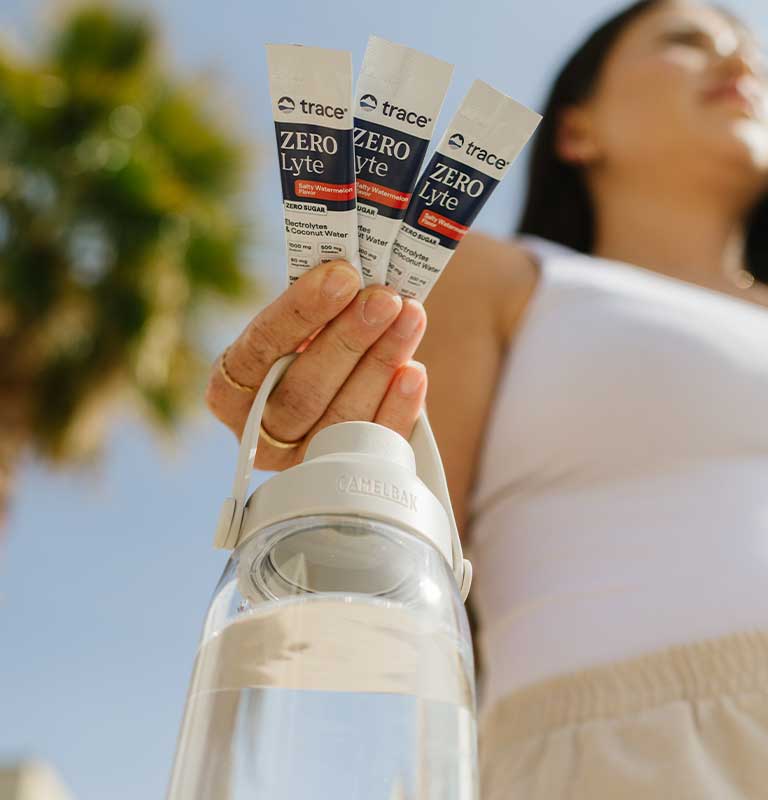


You're halfway through a run, finishing a tough workout, or pushing through the last few minutes of a game when suddenly a muscle tightens up. Exercise-associated muscle cramps can happen during or shortly after physical activity, and the exact cause isn't always straightforward.
For years, dehydration and electrolyte loss were commonly blamed for cramping during exercise. While hydration and electrolytes are important for active bodies, current research suggests the explanation is more complicated. Muscle fatigue, exercise intensity, neuromuscular activity, individual factors, and fluid and electrolyte balance may all be part of the bigger picture.
What Are Exercise-Associated Muscle Cramps?
Exercise-associated muscle cramps, often shortened to EAMCs, are involuntary contractions of skeletal muscles that happen during or shortly after physical activity.1
They commonly occur in muscles doing much of the work during exercise, such as the calves, hamstrings, or quadriceps. They can affect recreational exercisers and trained athletes.
Although exercise-associated muscle cramps are common, researchers still don't have one simple explanation for why they occur. Current evidence suggests several individual and exercise-related factors may be involved rather than one universal cause.
Why Do Muscles Cramp During Exercise?
The short answer is that researchers are still working to understand exactly why exercise-associated muscle cramps occur.
Two of the most frequently discussed explanations involve neuromuscular fatigue and changes in fluid and electrolyte balance. However, current research suggests exercise-associated muscle cramps are likely multifactorial.
Muscle Fatigue and Neuromuscular Control
One leading explanation centers on muscle fatigue and the communication between your muscles and nervous system.
Muscle movement depends on a constant exchange of signals between the nervous system and muscle tissue. As muscles become fatigued during demanding or prolonged activity, normal neuromuscular control may change.
One theory suggests fatigue can affect the balance between signals that encourage muscle contraction and those that help regulate it. When this balance changes, a muscle may become more susceptible to an involuntary contraction.
This may help explain why exercise-associated muscle cramps frequently occur in muscles that have been working especially hard.
Factors such as exercise intensity, duration, conditioning, and how accustomed your body is to a particular activity may all influence muscular fatigue.
Hydration and Fluid Balance
Your body relies on water for many normal processes, including temperature regulation and circulation. Physical activity increases fluid needs, especially during longer workouts or heavy sweating.
Fluid needs vary considerably from person to person. Workout duration and intensity, temperature, humidity, body size, and individual sweat rate can all affect how much fluid you need.
Although dehydration alone has not been established as the universal cause of exercise-associated muscle cramps, maintaining appropriate hydration remains an important part of supporting physical performance and an active lifestyle.3
Electrolytes
When you sweat, you lose more than water. Your body also rids itself of electrolytes such as sodium, potassium, magnesium, and chloride. These electrically charged minerals support many normal body processes.
These minerals help support:
- Fluid balance
- Normal muscle function
- Normal nerve function
- Cellular processes
The amount of electrolytes lost through sweat varies by individual and can also change with workout duration, intensity, and environmental conditions.
Research has not established electrolyte loss as the sole cause of exercise-associated muscle cramps. However, replacing fluids and electrolytes may be an important consideration during longer workouts, activities in warm environments, or exercise that involves significant sweating.
What Does Magnesium Do for Muscles?
Magnesium assists in supporting normal nerve and muscle function, energy production, and the movement of calcium and potassium across cell membranes. These processes support normal nerve signaling and muscle contraction.
Muscles need to contract and relax repeatedly during exercise. Magnesium is one of several nutrients involved in the process that makes that movement possible.
How Do Electrolytes Support an Active Lifestyle?
Electrolytes often get attention during exercise because physical activity and sweating can change both fluid and mineral needs.
Sodium is one of the primary electrolytes lost in sweat, while potassium, magnesium, and chloride also have important roles throughout the body.
Rather than thinking about electrolytes as a quick fix for muscle cramps, it may be more helpful to think of them as one part of an overall exercise nutrition and hydration plan.
That can include:
- Starting exercise appropriately hydrated
- Drinking fluids based on your individual needs
- Considering electrolytes during longer or sweat-heavy activities
- Eating a balanced diet
- Allowing adequate recovery between demanding workouts
Your needs may look different depending on the type of activity you're doing and the environment you're exercising in.
Supporting Muscle Stamina with Ionic Magnesium
Trace Minerals® Ionic Magnesium offers an easy way to add supplemental magnesium to your active wellness routine.
Rather than positioning magnesium as a solution for exercise-associated muscle cramps, think of it as part of the nutritional foundation that supports normal muscle function and an active lifestyle.
Consistency also matters. Building minerals, balanced nutrition, hydration, and recovery into your routine can help support your body before, during, and after physical activity.
Adding Electrolytes with 40,000 Volts
For workouts that involve plenty of movement and sweating, Trace Minerals® 40,000 Volts can fit into an active hydration routine.
40,000 Volts is a liquid electrolyte concentrate designed to be added to water or any drink of your choice to create an electrolyte replacement drink. Its sugar-free formulation provides both electrolytes and trace minerals that help support hydration, stamina, and normal muscle function during physical activity.†
Additionally, Trace Minerals® NO! Muscle Cramps provides magnesium, chloride, sodium, potassium, and ionic trace minerals to help support electrolyte balance as part of an active routine.† Think of it as one part of your overall hydration strategy rather than a treatment for muscle cramps.
What Factors May Contribute to Exercise-Associated Muscle Cramps?
No single formula predicts when a muscle cramp will happen. Research suggests individual circumstances matter.
|
Factor |
Why It May Matter |
|
Muscle fatigue |
Fatigue may affect normal neuromuscular control during demanding activity. |
|
Exercise intensity |
Working harder than your body is accustomed to may contribute to muscular fatigue. |
|
Exercise duration |
Longer activity can increase fatigue and fluid and electrolyte needs.2 |
|
Conditioning |
Your muscles may respond differently to activities or intensities they aren't accustomed to. |
|
Sweat rate
|
Individual sweat rates influence fluid and electrolyte losses. |
|
Environment
|
Heat and humidity can increase sweating and change hydration needs. |
|
Previous cramping |
Research suggests people with a history of exercise-associated cramps may be more likely to experience them again. |
These factors can overlap, which is one reason researchers increasingly view exercise-associated muscle cramps as multifactorial.
How to Support Your Muscles During Exercise
Instead of looking for one guaranteed way to avoid exercise-associated muscle cramps, focus on supporting the normal processes your muscles rely on during physical activity.
Build Up Gradually
Suddenly increasing workout intensity, duration, or training volume can place additional demands on your muscles. A gradual approach gives your body time to adapt to new activities and training loads.
Pay Attention to Hydration
Start with your everyday hydration habits and adjust based on activity, environment, and individual needs. Longer workouts, warmer conditions, and higher sweat rates may require more attention to both fluids and electrolytes.
Include Electrolytes When Appropriate
Electrolyte needs aren't identical for every workout. For shorter or lower-intensity activities, water may be enough for many people. During longer, more intense, or sweat-heavy exercise, an electrolyte product such as 40,000 Volts may be a convenient addition to your hydration routine.
Support Your Mineral Intake
A balanced diet provides a variety of minerals your body uses every day. Supplements such as Ionic Magnesium can also complement dietary intake when appropriate.
Make Recovery Part of Your Plan
Muscles need time to recover from physical activity. Adequate nutrition, hydration, sleep, and appropriate rest between demanding workouts are all parts of a balanced training routine.
Hydration, Electrolytes, and Muscle Function
It can be tempting to look for one nutrient or hydration strategy that explains everything that happens during exercise. The human body is more complicated than that.
Muscle contraction depends on coordinated activity between muscle tissue, nerves, electrolytes, and cellular energy systems. At the same time, exercise creates changing demands based on intensity, duration, environment, and individual physiology.
That's why an overall approach to exercise nutrition can be more useful than focusing on a single factor.
Consider your:
- Daily hydration
- Electrolyte needs
- Mineral intake
- Training intensity
- Recovery
- Sleep
- Overall nutrition
Together, these habits can help support normal muscle function, stamina, hydration, and an active lifestyle.
Key Takeaways About Muscle Cramps During Exercise
- Exercise-associated muscle cramps occur when a muscle suddenly contracts on its own during exercise or soon afterward.
- Researchers have not identified one universal cause of exercise-associated muscle cramps.
- Current evidence suggests muscle fatigue and changes in neuromuscular control may play an important role.
- Dehydration or electrolyte loss alone does not explain every exercise-associated muscle cramp.
- Electrolytes help support fluid balance and normal muscle and nerve function.
- Magnesium plays a role in normal muscle function, nerve function, and energy production.
- Hydration and electrolyte needs vary based on activity, environment, diet, and individual sweat rate.
- A balanced approach to training, hydration, nutrition, minerals, and recovery can help support an active lifestyle.
Frequently Asked Questions About Muscle Cramps During Exercise
Why do my muscles cramp when I exercise?
No single cause of exercise-associated muscle cramps is known. Current research suggests several factors may contribute, with muscle fatigue and changes in neuromuscular control receiving significant attention. Exercise intensity, conditioning, individual history, hydration, and other factors may also play a role.
Does dehydration always cause muscle cramps?
No. Although dehydration has historically been linked to exercise-related cramping, research does not support it as the sole explanation. Exercise-associated muscle cramps can occur under a variety of conditions, and current evidence suggests they are multifactorial.3
Do electrolytes help with muscle function?
Your body relies on electrolytes such as magnesium, potassium, sodium, and chloride to support fluid balance and help muscles and nerves function normally.
What does magnesium do during exercise?
Magnesium helps move calcium and potassium between cells, supporting normal nerve and muscle function.
When should I consider electrolytes during exercise?
Individual needs vary. Workout duration and intensity, environmental conditions, diet, and sweat rate can all influence fluid and electrolyte needs. Electrolytes may be worth considering as part of your hydration plan during longer activities or workouts that involve significant sweating.
The Bottom Line
If you've wondered why muscles cramp during exercise, the answer isn't as simple as blaming dehydration or a lack of electrolytes.
Research suggests exercise-associated muscle cramps likely involve multiple factors, with muscular fatigue and altered neuromuscular control playing an important role.
That doesn't make hydration or minerals any less important to an active lifestyle. Electrolytes help support hydration and normal muscle and nerve function, while magnesium supports normal muscle function and energy production.4
Instead of looking for a single quick fix, focus on the bigger picture. Train appropriately for your activity, stay hydrated, support your mineral intake, and give your body time to recover.
Products such as Trace Minerals® Ionic Magnesium and 40,000 Volts can complement those everyday habits by supporting normal muscle function, hydration, stamina, and an active lifestyle.†
Read Also
- Great Salt Lake Minerals: Why This Source Makes Great Supplements
- Magnesium Benefits: Why It’s Essential For Your Health
Sources
- Miller, K. C., McDermott, B. P., Yeargin, S. W., Fiol, A., & Schwellnus, M. P. (2022). An evidence-based review of the pathophysiology, treatment, and prevention of exercise-associated muscle cramps. Journal of Athletic Training, 57(1), 5–15. https://pmc.ncbi.nlm.nih.gov/articles/PMC8775277/
- Nelson, N. L., & Churilla, J. R. (2016). A narrative review of exercise-associated muscle cramps: Factors that contribute to neuromuscular fatigue and management implications. Muscle & Nerve, 54(2), 177–185. https://pubmed.ncbi.nlm.nih.gov/27159592/
- Schwellnus, M. P. (2009). Cause of exercise-associated muscle cramps (EAMC): Altered neuromuscular control, dehydration, or electrolyte depletion? British Journal of Sports Medicine, 43(6), 401–408. https://pubmed.ncbi.nlm.nih.gov/18981039/
- National Institutes of Health, Office of Dietary Supplements. (2026). Magnesium: Fact sheet for health professionals. https://ods.od.nih.gov/factsheets/magnesium-healthProfessional/
†These statements have not been evaluated by the Food and Drug Administration. Product(s) mentioned are not intended to diagnose, treat, cure, or prevent any disease. The information in this article is for educational purposes only and is not intended as medical advice. Consult your healthcare provider before making significant changes to your diet or supplement routine.